
In 2025, tools that once seemed futuristic (autonomous report generation, real-time policy intelligence, predictive price modeling) are now being adopted as standard in serious climate finance firms, consultancies, and registries.
While global carbon credit markets continue in experiencing unprecedented growth into 2025, compliance regimes and voluntary offset markets generate massive volumes of regulatory documents, price data, project registrations, emissions reports, and stakeholder commentary. Traditional analysts struggle to keep up. Enter generative AI and Large Language Models (LLMs), now becoming essential tools in carbon market research, forecasting, verification, and policymaking.
In 2025, tools that once seemed futuristic (autonomous report generation, real-time policy intelligence, predictive price modeling) are now being adopted as standard in serious climate finance firms, consultancies, and registries. This post explores how generative AI is reshaping carbon market analytics, the benefits and risks, and how brands and platforms can leverage SEO-friendly strategies to capture traffic and authority.
Here are key areas where generative AI is transforming analytics in the carbon market:
Deep research synthesis & real-time intelligence
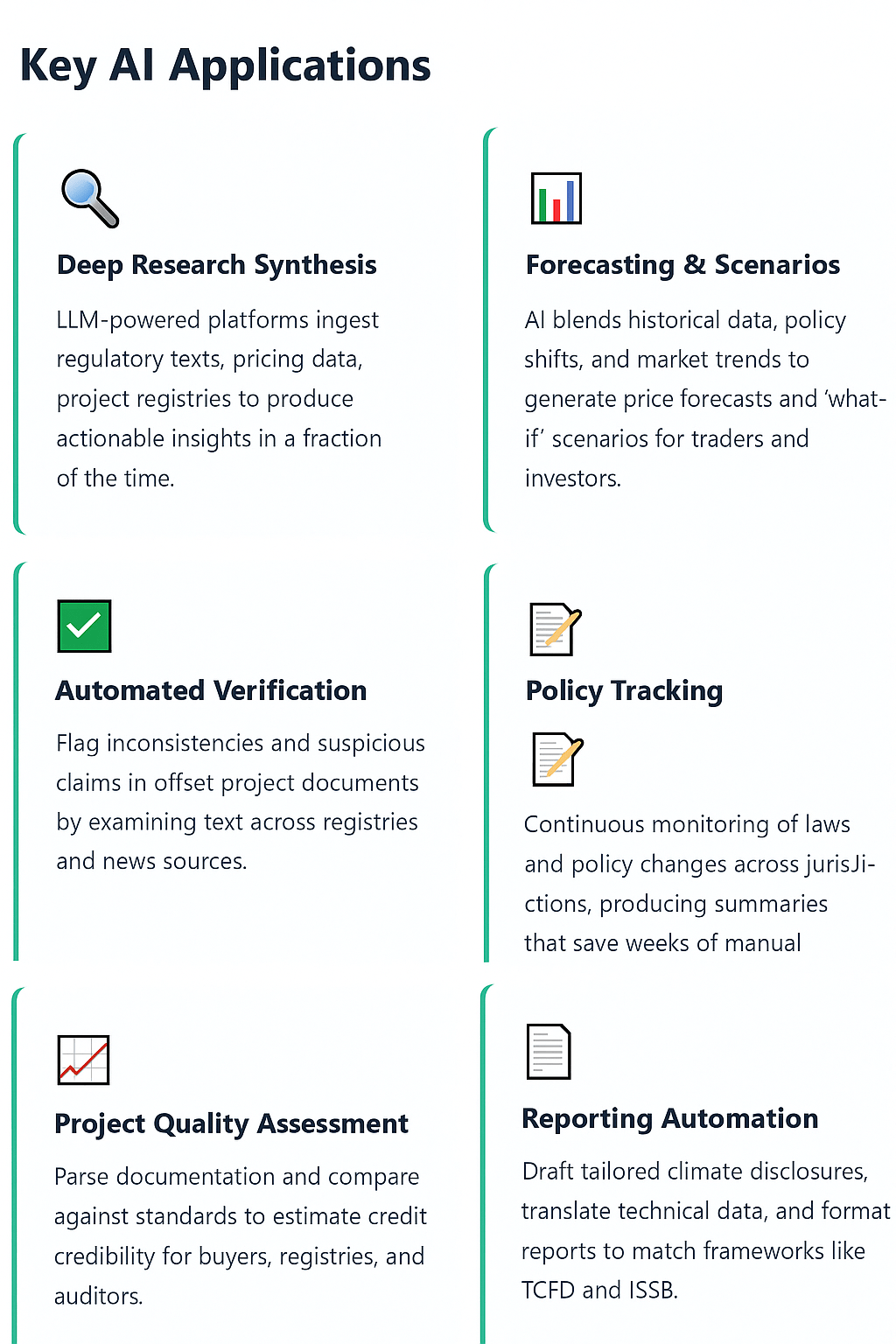
Analytical platforms like GreenIQ (recently published in arXiv) use LLM-powered “agent architectures” to ingest regulatory texts, policy briefs, pricing data, project registries, and academic literature. These systems autonomously produce actionable reports and insights across jurisdictions in a fraction of the time and cost compared to manual research.
This drastically improves speed and coverage, especially when regulations evolve swiftly or vary regionally.
Natural language interfaces and forecasting
Instead of extracting data manually, analysts can ask AI “What will EUA prices be in Q4 2026 given current legislation trends?” or “Which offsets projects in Southeast Asia align with high-integrity standards?” The AI then blends past data, policy shifts, emissions forecasts, and market trends to produce plausible scenarios.
Automated verification & detective work
Generative AI helps flag inconsistencies, rare language patterns, or suspicious claims in offset project documents. By examining text across registries, news, and domain knowledge, AI can surface red flags that humans would otherwise miss or take far longer to identify.
Building better carbon accounting tools
Reports suggest the carbon accounting software market is set to grow ~$33 billion between 2025-2029, partly driven by AI integration. Generative AI can assist by automating emissions calculations, verifying uploaded data, and providing audit trails for compliance and voluntary markets.
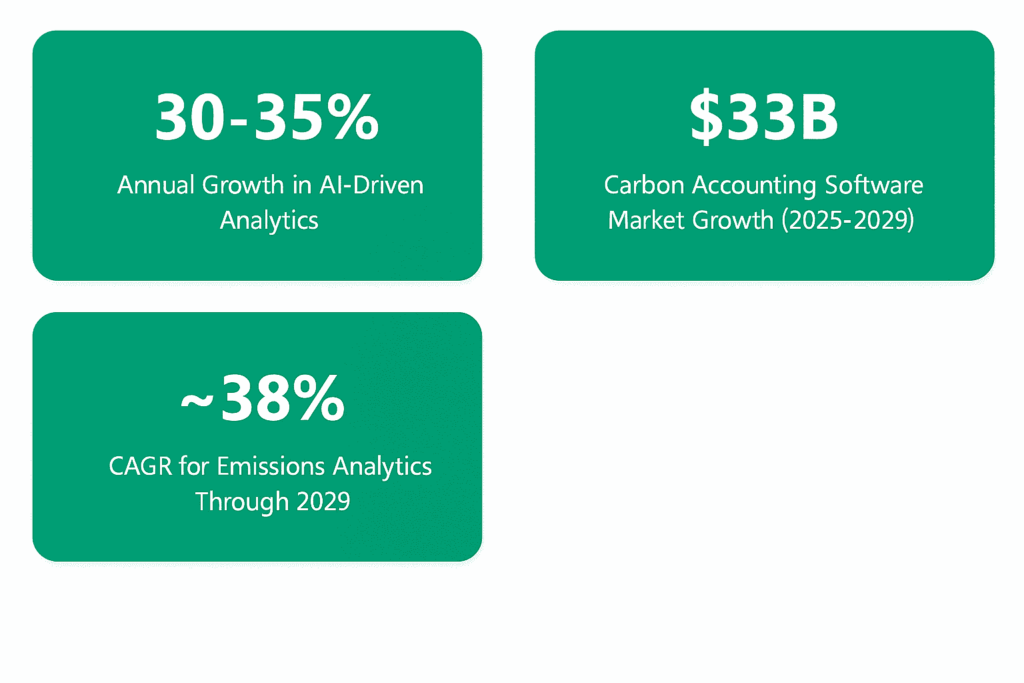
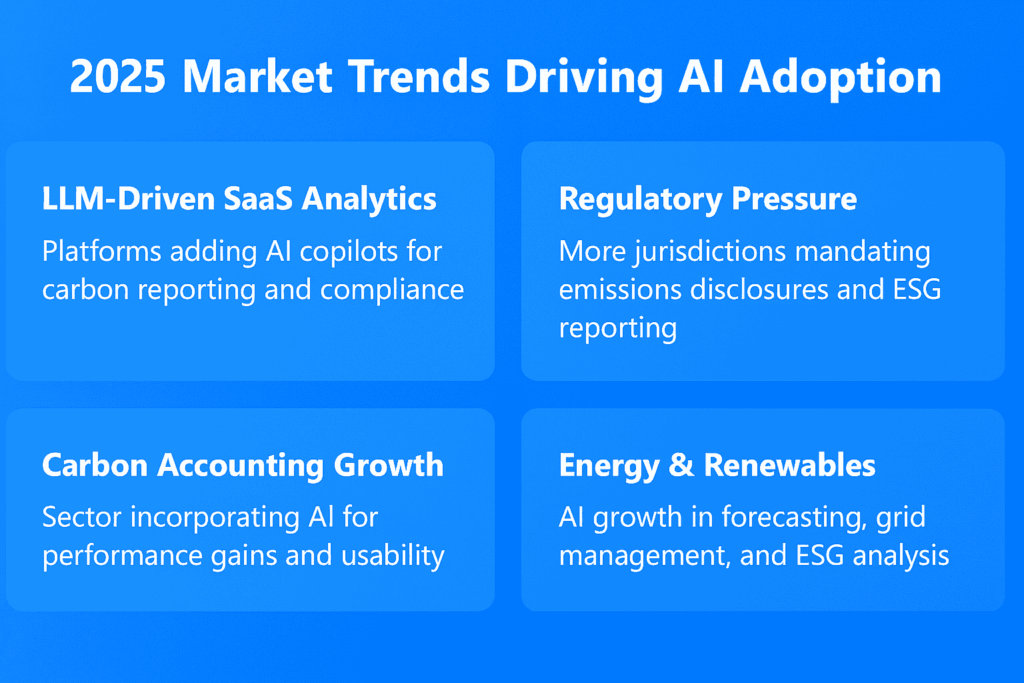
Several macro trends support the rise of generative AI in carbon market analytics:
These dynamics mean analytics tools are not just nice-to-have—they’re becoming essential infrastructure in carbon markets.
Here are several concrete applications where generative AI is already making impacts:
Policy tracking and jurisdictional intelligence
Carbon markets are heavily regulated. AI platforms continuously monitor laws and policy changes in dozens of jurisdictions and produce summaries highlighting risks, opportunities, and implications. This saves weeks of manual labor for carbon traders, project developers, and compliance officers.
Pricing predictions and scenario analysis
Using historical allowance and credit prices, emission caps, and macroeconomic inputs, AI models generate price forecasts and “what-if” scenarios. Traders and offset project investors use these AI predictions to optimize timing and hedging strategies.
Project quality assessment
AI tools parse project documentation-methodologies, regional risk profiles, co-benefit claims-and compare them against known standards to estimate credibility. This helps buyers, registries, and auditors triage high-risk credits.
Reporting automation
When regulators or sustainability frameworks demand climate disclosures, generative AI can draft tailored reports, translate technical data into plain language, and format disclosures to match frameworks like TCFD, ISSB, or local laws.
Market intelligence & competitor monitoring
Platforms provide alerts on large offset transactions, new registries, legal decisions, or climate litigation – all extracted automatically from public documents and news sources.
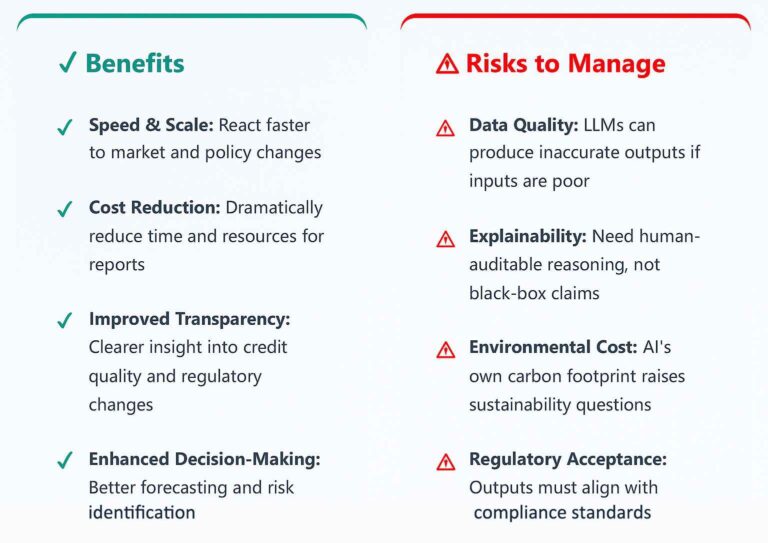
Benefits
Risks to manage
Best practices
Generative AI is no longer just a buzzword—it’s rapidly becoming infrastructure in carbon market analytics. From speeding up policy research (via tools like GreenIQ) to improving verification and price forecasting, AI is helping analysts, project developers, companies, and regulators work faster, smarter, and more confidently.
But it’s not a silver bullet. Ensuring data quality, auditability, and environmental responsibility are essential. As demand for high-integrity emissions analytics climbs—and as carbon accounting software markets are projected to grow massively through 2029.