
Carbon credits are a market-based mechanism designed to reduce greenhouse gas emissions by assigning monetary value to the reduction or removal of one metric ton of carbon dioxide equivalent (CO2e).
Carbon credits are a market-based mechanism designed to reduce greenhouse gas emissions by assigning monetary value to the reduction or removal of one metric ton of carbon dioxide equivalent (CO2e). Each verified carbon credit represents a measurable environmental benefit and can be used by companies to offset their own emissions footprint.
Organizations that emit greenhouse gases beyond established thresholds—either voluntarily or under regulation—may purchase verified carbon credits to compensate for the excess. These credits are created by certified carbon projects, such as nature-based afforestation, renewable energy installations, or engineered carbon removal technologies.
By allowing credits to be traded in compliance and voluntary carbon markets, the system creates financial incentives for companies to reduce emissions at the source or fund credible climate solutions elsewhere. As one of the leaders in this space, Green Carbon Corp supports a platform for high-integrity carbon credit procurement and transparent tracking to align with global net zero goals.
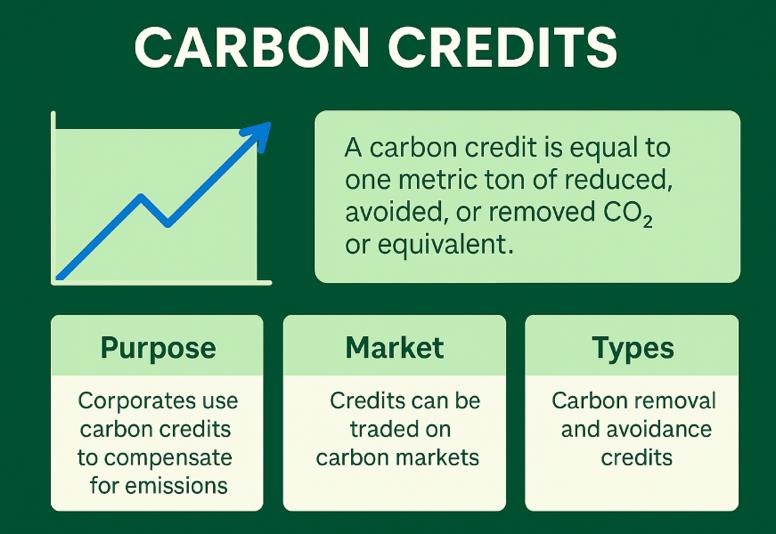
Carbon credits operate within both compliance frameworks and the growing voluntary carbon market. The process is structured to ensure accountability, flexibility, and incentives for climate action
Emissions Limits: Emissions Limits
In compliance carbon markets—such as the EU Emissions Trading System (EU ETS) or California’s Cap-and-Trade program—regulated entities are assigned emissions caps. These caps represent the maximum amount of greenhouse gases (GHGs) they are permitted to emit within a specific reporting period. The caps are typically aligned with national or international climate targets and are gradually reduced over time to incentivize systemic decarbonization.
Even in the voluntary carbon market (VCM), many corporations are now setting self-imposed emissions limits under science-based targets or net zero pledges. These voluntary caps mimic regulatory frameworks but are driven by ESG strategy, investor expectations, and reputational considerations.
When a company exceeds its assigned emissions threshold—either legally mandated or voluntarily adopted—it is faced with three options:
Carbon credits function as a market-based compliance tool in this context. Each credit represents one metric ton of CO₂ equivalent (tCO₂e) that has been reduced, avoided, or removed elsewhere in the world. Buying verified credits allows a company to offset the portion of emissions it cannot yet eliminate operationally.
In compliance carbon markets—such as the EU Emissions Trading System (EU ETS) or California’s Cap-and-Trade program—regulated entities are assigned emissions caps. These caps represent the maximum amount of greenhouse gases (GHGs) they are permitted to emit within a specific reporting period. The caps are typically aligned with national or international climate targets and are gradually reduced over time to incentivize systemic decarbonization.
Regulated by governments or international bodies. Common in regions with a carbon cap-and-trade system.
Driven by corporate sustainability commitments rather than legal mandates. Companies buy credits to offset emissions beyond regulatory requirements or as part of ESG strategy.
Companies source credits through:
Once purchased, credits are retired on a public registry (e.g., Gold Standard, Verra) to ensure they are not reused. This retirement process creates an auditable trail of carbon compensation.
The ability to buy and retire verified carbon credits:
By placing a price on carbon emissions, carbon credits convert climate accountability into an economic driver. Companies are incentivized to reduce emissions at the source or invest in high-integrity mitigation projects rather than pay for excessive CO2e output. This shift not only improves corporate sustainability profiles but also helps channel capital into innovation and low-carbon technologies
Compliance Market – Regulated by governments or international bodies. Common in regions with a carbon cap-and-trade system. Voluntary Carbon Market (VCM) – Driven by corporate sustainability commitments rather than legal mandates. Companies buy credits to offset emissions beyond regulatory requirements or as part of ESG strategy.
Compliance Markets: Government-regulated systems where companies must offset emissions beyond regulatory caps.
Voluntary Carbon Markets (VCM): Unregulated environments where businesses proactively purchase credits to support ESG goals, build climate credentials, or prepare for anticipated regulatory pressure.
Generated by projects that prevent new emissions, such as forest conservation, clean cookstove distribution, or methane capture. These credits offer cost-effective offsets but are increasingly scrutinized for their long-term impact.
Created by initiatives that extract CO2e already in the atmosphere. Examples include afforestation, soil carbon enhancement, and engineered carbon removal methods like biochar and direct air capture. These are viewed as more durable and verifiable.
Green Carbon Corp supports both avoidance and removal credit strategies, with a growing focus on high-quality, nature-based carbon credits and engineered removals that meet emerging global standards.
Valuation is influenced by factors like credit vintage, project location, co-benefits, and buyer demand. A 300-million-ton credit portfolio could range from $1.2B (avoidance) to $180B (engineered removals).
This pricing spread highlights the growing preference for high-quality carbon offsets in capital markets. As demand for permanent carbon removal rises, investors are repositioning carbon credits not just as compliance tools, but as alternative climate-linked assets.

The global carbon credit market is projected to grow from $2 billion in 2022 to $250 billion by 2050. This surge is fueled by climate regulation, investor interest, and the adoption of high-integrity standards.
Digital MRV and blockchain are enhancing transparency, auditability, and global trust. Carbon credits are rapidly evolving from environmental instruments into climate-linked financial assets. Green Carbon Corp is at the forefront— supporting investors, companies, and governments with verified carbon credit procurement and portfolio integration.
The takeaway is this: Carbon credits are no longer a fringe environmental concern—they are a core asset in corporate climate strategy, financial risk management, and long-term value creation.
For further reading see articles:
By placing a price on carbon emissions, carbon credits convert climate accountability into an economic driver. Companies are incentivized to reduce emissions at the source or invest in high-integrity mitigation projects rather than pay for excessive CO2e output. This shift not only improves corporate sustainability profiles but also helps channel capital into innovation and low-carbon technologies.
Green Carbon Corp supports this shift by offering verified credit access, project-level due diligence, and tailored procurement solutions for enterprise ESG portfolios.
Carbon credits serve as a financial catalyst for climate action. By monetizing emission reductions, they direct capital toward sustainability efforts—such as renewable energy deployment, reforestation, and innovation in carbon capture. This market-based approach supports the global transition to a low-carbon economy while enabling companies to meet internal climate targets and stakeholder expectations.
From an economic standpoint, carbon credits internalize what was once an externality. They place a price on carbon emissions—transforming pollution into a measurable cost. This shifts emissions from an untracked liability into a managed asset class. Green Carbon Corp helps institutional buyers and ESG leaders invest in carbon credits that align with both financial and environmental performance targets.
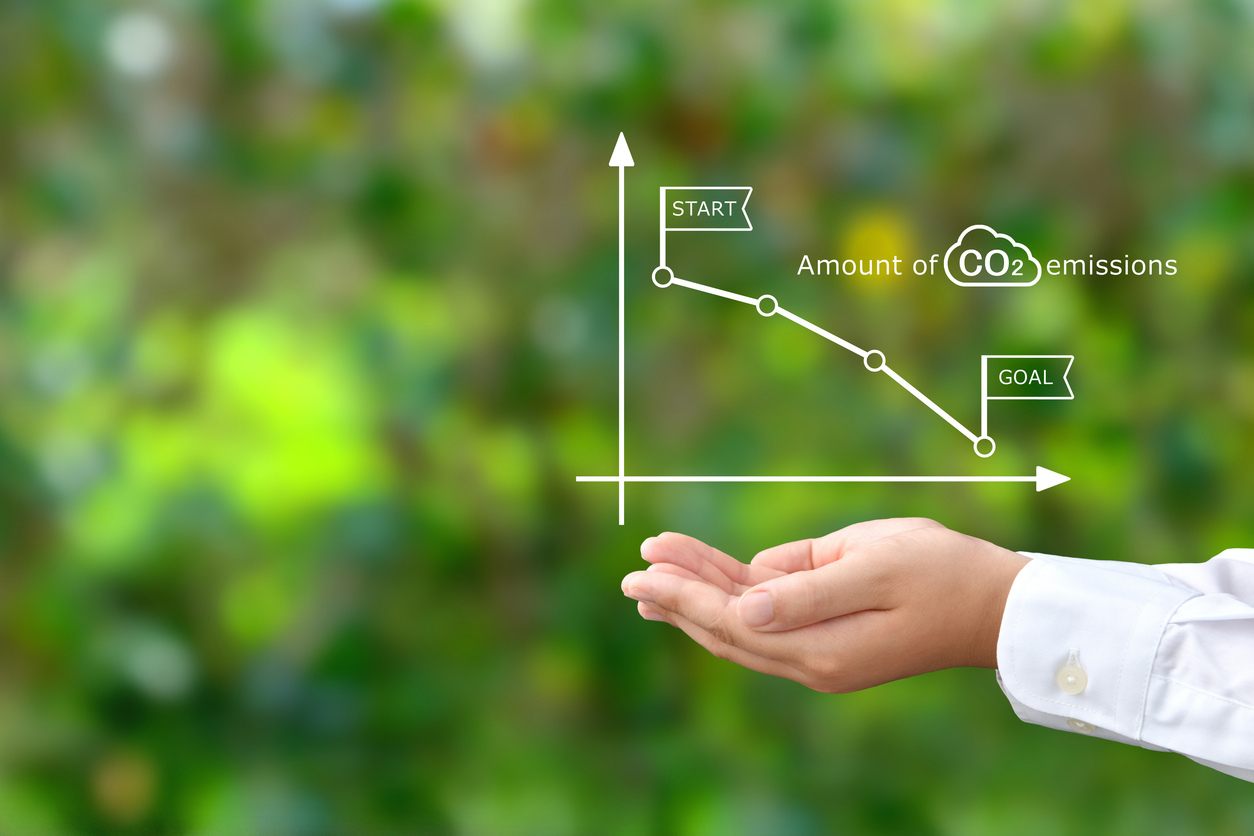
In the race to net-zero, carbon credits have emerged as one of the most financially and strategically significant tools for businesses. Carbon credits are more than an environmental checkbox—they’re a tradable asset class, a regulatory arbitrage opportunity, and a reputation management tool that operates in a growing global marketplace.
In today’s carbon offset marketplace, not all credits hold equal value. The credibility, cost, and climate impact of a carbon credit depend on its project type, registry, methodology, and co-benefits.
What Influences Credit Valuation?
Carbon credit pricing is shaped by a variety of investment-relevant factors, including:
| Credit Type | Examples | Typical Price Range (2024) | Investor Notes |
|---|---|---|---|
| Avoidance Credits | Renewable energy, improved cookstoves | $1–$5 per tCO₂e | Cost-effective; under scrutiny for impact attribution and additionality |
| Nature-Based Removals | Reforestation, afforestation, soil carbon | $20–$25 per tCO₂e | Strong ESG alignment; offers biodiversity or social co-benefits |
| Engineered Removals | Biochar, direct air capture, mineralization | $140–$600 per tCO₂e | Highest integrity and permanence; early-stage but rapidly gaining demand |
Consider a portfolio involving 300 million tons of carbon credits. Depending on credit quality, the value shifts dramatically:
If your 300 million tons were:
From a market theory standpoint, carbon credits internalize an externality. In traditional economic models, environmental degradation is treated as an external cost—unpriced and unaccounted for in profit and loss statements. Carbon markets reverse this by placing a price on carbon emissions.
In this system:
Here, the supply side consists of projects that remove or avoid emissions. The demand side includes corporations and nations looking to offset their carbon footprint. Like any market, the equilibrium price of carbon credits is determined by this interaction of supply and demand—though highly influenced by regulations, certification standards, and global sentiment.
Since the certification standard is VCS, the 300 million tCO₂e of verified offsets can fall under various project types, each with different price ranges and credibility levels.
| Scenario | Need UIN? | Need ISIN? |
|---|---|---|
| Voluntary carbon credit purchase for ESG goals | Yes | No |
| Retirement of credits from a Verra project | Yes | No |
| Trading credits as part of a tokenized fund | Yes | Yes |
| Listing credits on an exchange like ACX or CBL | Yes | Yes |
| Internal reporting only (non-market use) | Yes | No |
International Securities
Identification Numbers Organization